Photobioreactor Manufacturer in Pune
Dhruv Fabrotech is Leading Photobioreactor Manufacturer, Supplier in Pune
Dhruv Fabrotech is a Pune-based Photobioreactor Manufacturer in Pune offering laboratory and research-oriented photobioreactor systems for controlled cultivation of algae, cyanobacteria, and other photosynthetic microorganisms. The systems are designed to help researchers manage important process conditions such as light exposure, temperature, pH, dissolved oxygen, CO₂ supply, aeration, mixing, and nutrient distribution.
Photobioreactors are useful where controlled cultivation is important for research, process development, biomass studies, and biotechnology applications. Dhruv Fabrotech manufactures systems in India and supplies them to laboratories, universities, research institutions, biotechnology companies, and other organizations based on their application and required working capacity.
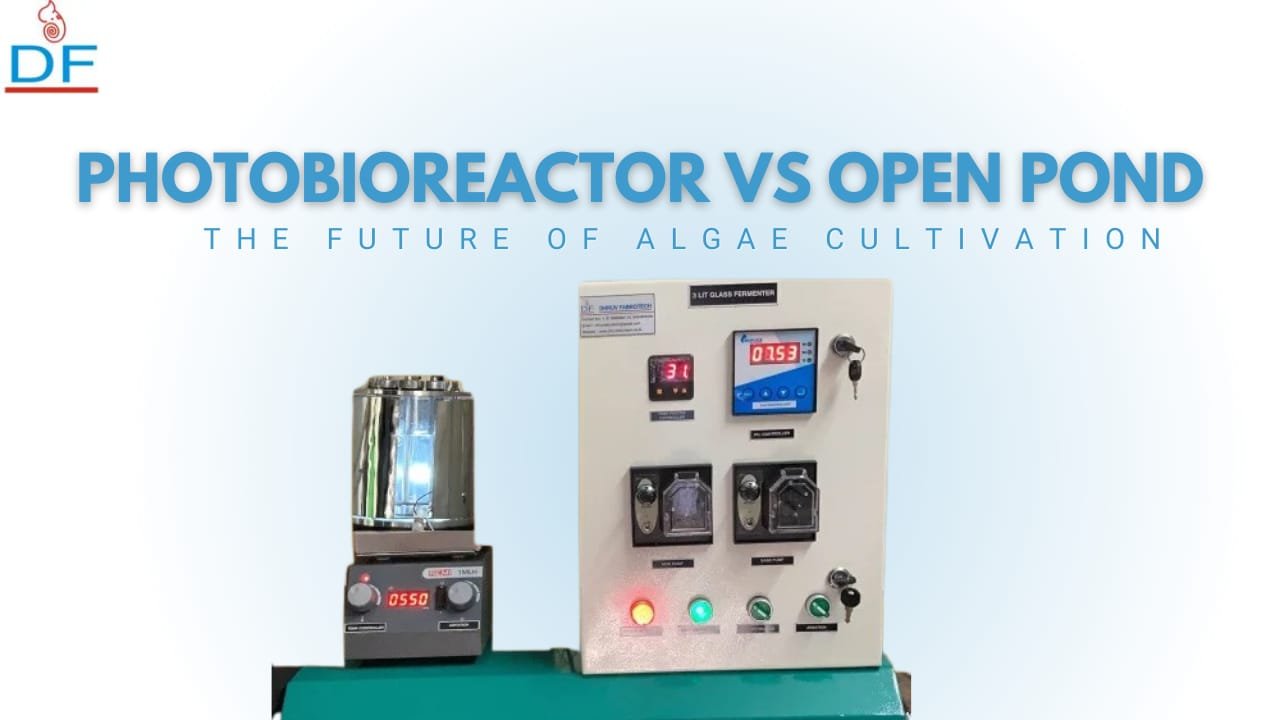
Photobioreactor Manufacturer in Pune – Dhruv Fabrotech
A photobioreactor is a controlled cultivation system used to grow photosynthetic organisms under managed environmental conditions. Unlike open cultivation systems, a photobioreactor allows researchers to monitor and control selected parameters that influence culture growth.
Light is one of the most important elements because photosynthetic organisms require light for growth. Along with lighting, the system can manage CO₂ supply, aeration, mixing, temperature, pH, dissolved oxygen, and nutrient distribution. This gives researchers a more controlled environment for studying growth and process behavior.
Why Choose Photobioreactor?
Dhruv Fabrotech focuses on configuring the equipment around the actual application rather than providing a standard setup for every project. Its laboratory photobioreactors can be manufactured using borosilicate glass and SS 316L, depending on the required configuration.
Key reasons to consider Dhruv Fabrotech include:
- 2 L to 20 L laboratory photobioreactor range
- Borosilicate glass and SS 316L construction options
- Manual, semi-automatic, and fully automatic configurations
- pH and dissolved oxygen monitoring options
- Temperature monitoring and control
- Controlled lighting and CO₂ supply
- Suitable aeration and mixing arrangements
- Customization based on research requirements & Pune support
Biotechnology Research
Biotechnology laboratories use photobioreactors for strain studies, biomass development, process optimization, culture-condition studies, and photosynthetic microorganism research.
Biofuel Research
Microalgae are studied as potential sources of biomass for renewable fuel research, examining CO₂ utilization and process conditions before pilot-scale studies.
Environmental Research
Supports research related to CO₂ fixation, wastewater treatment, nutrient uptake, biomass generation, and environmental biotechnology.
Nutraceutical & Bioproduct Research
Algae are studied for proteins, pigments, antioxidants, and biological compounds under controlled laboratory-scale cultivation conditions.
Academic & Institutional Research
Universities and research institutes use laboratory photobioreactors for practical training, algae cultivation studies, biotechnology projects, and strain development.
Specialized Photosynthetic Studies
Includes cyanobacteria research, agricultural biotechnology, biofertilizer studies, pigment research, pharmaceutical R&D, and cosmetic ingredient research.