India-Based Manufacturer & Global Exporter

Photobioreactor Manufacturer in India

Dhruv Fabrotech is Leading Photobioreactor Manufacturer, Supplier in India

Dhruv Fabrotech is an India-based Photobioreactor Manufacturer in India offering laboratory and research-oriented photobioreactor systems for controlled cultivation of algae, cyanobacteria, and other photosynthetic microorganisms. The systems are designed to help researchers manage important process conditions such as light exposure, temperature, pH, dissolved oxygen, CO₂ supply, aeration, mixing, and nutrient distribution.

Photobioreactors are useful where controlled cultivation is important for research, process development, biomass studies, and biotechnology applications. Dhruv Fabrotech manufactures systems in India and supplies them to laboratories, universities, research institutions, biotechnology companies, and other organizations based on their application and required working capacity.
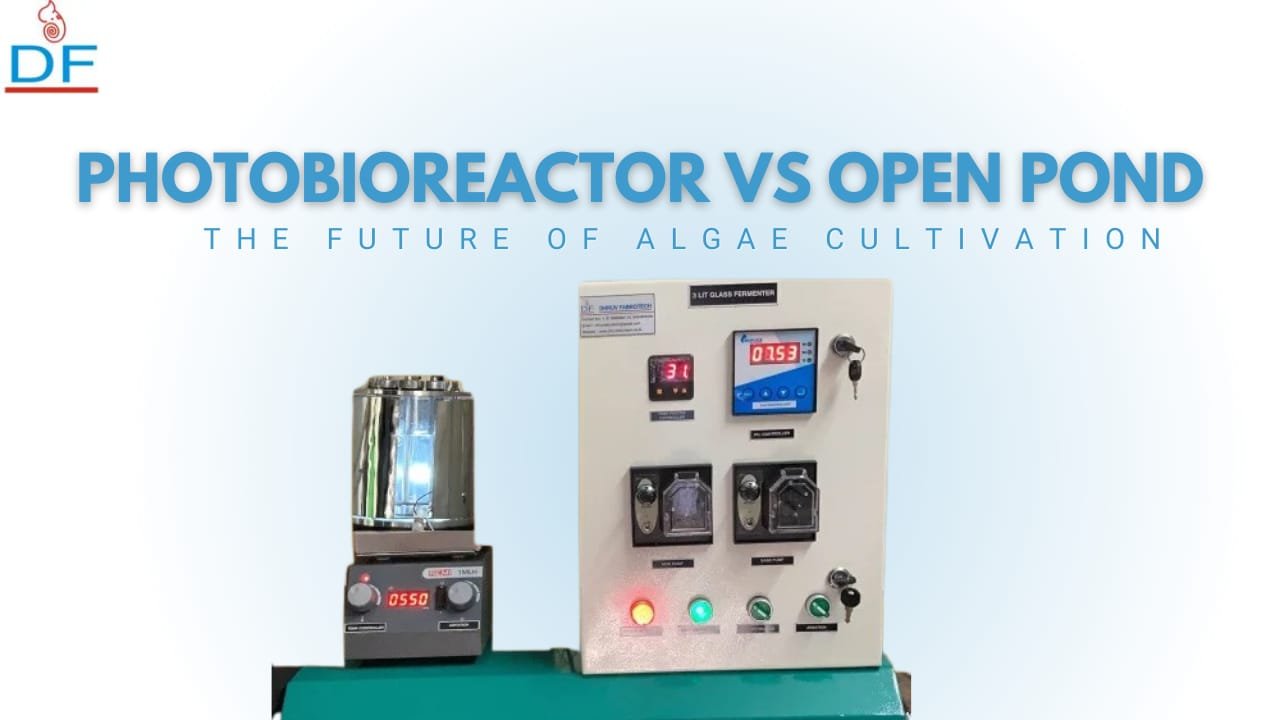
Photobioreactor Manufacturer in India

Photobioreactor Manufacturer in India – Dhruv Fabrotech

A photobioreactor is a controlled cultivation system used to grow photosynthetic organisms under managed environmental conditions. Unlike open cultivation systems, a photobioreactor allows researchers to monitor and control selected parameters that influence culture growth.

Light is one of the most important elements because photosynthetic organisms require light for growth. Along with lighting, the system can manage CO₂ supply, aeration, mixing, temperature, pH, dissolved oxygen, and nutrient distribution. This gives researchers a more controlled environment for studying growth and process behaviour.

Why Choose Photobioreactor?

Dhruv Fabrotech focuses on configuring the equipment around the actual application rather than providing a standard setup for every project. Its laboratory photobioreactors can be manufactured using borosilicate glass and SS 316L, depending on the required configuration. Key reasons to consider Dhruv Fabrotech include:

  • 2 L to 20 L laboratory photobioreactor range
  • Borosilicate glass and SS 316L construction options
  • Manual, semi-automatic, and fully automatic configurations
  • pH and dissolved oxygen monitoring options
  • Temperature monitoring and control
  • Controlled lighting and CO₂ supply
  • Suitable aeration and mixing arrangements
  • Flexible sensor and sampling configurations
  • Customization based on research requirements
  • Manufacturing and technical support from India

The systems can be configured for algae research, biotechnology studies, biomass development, environmental research, and other photosynthetic culture applications.

Biotechnology Research

Biotechnology laboratories use photobioreactors for strain studies, biomass development, process optimization, culture-condition studies, and other research involving photosynthetic microorganisms.

Biofuel Research

Microalgae are studied as potential sources of biomass for renewable fuel research. Photobioreactors provide a controlled environment for studying growth, biomass development, CO₂ utilization, and process conditions before moving toward larger-scale studies.

Environmental Research

Photobioreactors can support research related to CO₂ fixation, wastewater treatment, nutrient uptake, biomass generation, and environmental biotechnology.

Nutraceutical & Bioproduct Research

Algae are studied for compounds such as proteins, pigments, antioxidants, and other biological products. Photobioreactors can provide controlled cultivation conditions during laboratory-scale research and process development.

Academic & Institutional Research

Universities and research institutes can use laboratory photobioreactors for practical training, algae cultivation studies, biotechnology projects, strain development, and experimental research. Other applications include cyanobacteria research, agricultural biotechnology, biofertilizer studies, pigment research, pharmaceutical R&D, cosmetic ingredient research, and biomass-related studies.

Salient Features of Our Photobioreactors

The exact features depend on the selected model and configuration. Important features include:

2 L to 20 L capacity range for laboratory applications
Borosilicate glass and SS 316L construction based on configuration
Transparent reactor vessel for visual observation of the culture
Controlled lighting system suitable for photosynthetic cultivation
pH monitoring and control options
Dissolved oxygen monitoring where required
Temperature monitoring and control
Controlled air and CO₂ supply
Aeration and culture mixing arrangements
Sampling and nutrient-feed provisions where applicable
Manual, semi-automatic, or fully automatic operation
Flexible sensor configuration
Process monitoring through the selected control system
Compact laboratory-oriented design
Customizable configuration according to the research application

The available technical specifications can vary depending on the selected model. The laboratory range includes models from DFPBR2L to DFPBR20L. Other parameters, including lighting, gas flow, pump arrangement, sensors, and automation, should be confirmed according to the final equipment configuration.

Technical Specifications

Parameter Specification / Option Range
Product Type Photo Bio Reactor / Photobioreactor System
Model Series DFPBR2L to DFPBR20L
Capacity Range 2 L to 20 L Laboratory Scale
Vessel Construction Borosilicate Glass & Stainless Steel SS 316L
Monitored Parameters Light Exposure, Temperature, pH, Dissolved Oxygen (DO), CO₂ & Aeration
Operation Mode Manual, Semi-Automatic, or Fully Automatic Configurations
Primary Target Organisms Algae, Microalgae, Cyanobacteria & Photosynthetic Microorganisms

Benefits of Using a Photobioreactor

A photobioreactor provides researchers with greater control over cultivation conditions compared with uncontrolled or open cultivation methods.

Controlled Environment

Light, temperature, pH, CO₂, aeration, and mixing can be managed according to the process requirement.

Better Monitoring

Sensors allow researchers to observe important cultivation parameters during the experiment.

Improved Contamination Management

A controlled system can reduce exposure to external contaminants compared with open cultivation.

Consistent Mixing

Proper circulation helps distribute nutrients, gases, and light exposure throughout the culture.

Controlled CO₂ Supply

CO₂ can be supplied according to the requirements of the organism and research process.

Efficient Use of Laboratory Space

Laboratory-scale systems provide controlled cultivation without requiring large outdoor areas.

Repeatable Research Conditions

Defined operating conditions make it easier to compare results between experiments.

Flexible Configuration

Sensors, lighting, automation, aeration, and other components can be selected according to the application.

Support for Scale-Up Studies

Laboratory results can provide useful information for future pilot-scale process development.

Looking for a Photobioreactor Manufacturer in India?

Contact Dhruv Fabrotech today to discuss your photobioreactor requirements, working capacity options, lighting setups, and pricing details.

Contact Us Now

FAQ – Photobioreactor in India

1. Who is a Photobioreactor Manufacturer in India?
Dhruv Fabrotech is an India-based manufacturer of photobioreactors and related biotechnology equipment for laboratory, research, algae cultivation, environmental biotechnology, and other applications.
2. What is a Photobioreactor used for?
A photobioreactor is used to cultivate algae, microalgae, cyanobacteria, and other photosynthetic microorganisms under controlled conditions for research, biomass studies, biotechnology, environmental research, and related applications.
3. What capacity Photobioreactors does Dhruv Fabrotech manufacture?
Dhruv Fabrotech's laboratory photobioreactor range includes approximately 2 L to 20 L, depending on the selected model and configuration.
4. What organisms can be cultivated in a Photobioreactor?
Photobioreactors can be used for algae, microalgae, cyanobacteria, and other photosynthetic microorganisms. The suitable configuration depends on the organism and research objective.
5. What are the main types of Photobioreactors?
Common photobioreactor designs include tubular, flat-panel, bubble-column, airlift, and laboratory glass photobioreactors. The suitable design depends on the organism, scale, light requirement, mixing method, and intended application.

OUR LOCATIONS

CLICK TO OPEN