Fermentation Process Equipment Manufacturer in India
Dhruv Fabrotech is Leading Fermentation Process Equipment Manufacturer, Supplier in India
Dhruv Fabrotech is an India-based Fermentation Process Equipment Manufacturer in India, supplying fermentation and bioprocess equipment for biotechnology, pharmaceuticals, biofertilizers, agricultural biotechnology, enzyme production, probiotics, food biotechnology, microbial products, and research applications.
Fermentation processes require controlled conditions to support consistent microbial or biological activity. Dhruv Fabrotech manufactures equipment that can be configured for parameters such as temperature, pH, dissolved oxygen, aeration, agitation, feeding, and process monitoring. Depending on the application, the equipment may be designed for laboratory research, pilot-scale trials, or industrial production.
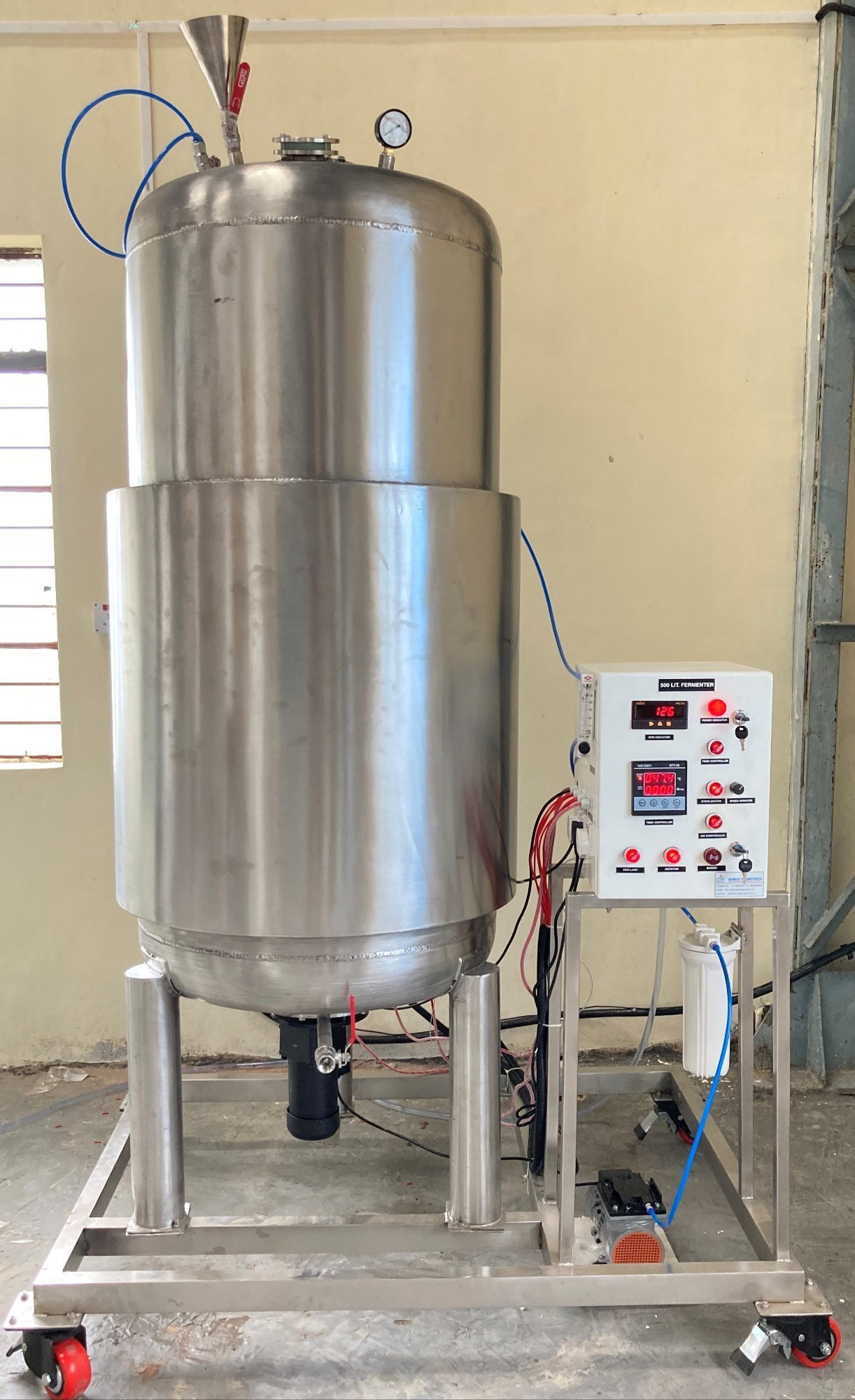
Fermentation Process Equipment Manufacturer in India – Dhruv Fabrotech
Fermentation process equipment refers to the vessels, machines, sensors, control systems, and supporting equipment used to carry out fermentation under controlled conditions. A typical system may include a fermenter or bioreactor, agitator, aeration system, sparger, temperature-control system, pH sensor, dissolved oxygen sensor, sampling ports, feeding arrangements, and control panel.
The equipment required depends on the microorganism, product, working volume, and stage of development. A small laboratory fermenter used for research will have different requirements from an industrial fermentation system used for production.
Why Choose Fermentation Process Equipment?
Dhruv Fabrotech approaches fermentation equipment from a process perspective. Instead of treating every requirement as a standard installation, the equipment can be configured around the customer's actual application. Important advantages include:
- Experience in fermentation and biotechnology equipment manufacturing
- Laboratory, pilot-scale, and industrial equipment options
- Manual, semi-automatic, and fully automatic configurations
- Stainless steel and borosilicate glass options, depending on application
- Agitation and aeration arrangements suited to the process
- pH, temperature, and dissolved oxygen monitoring options
- Flexible sensor, sampling, and feeding arrangements
- Customized vessel and equipment configurations
- Equipment suitable for biofertilizer and microbial processes
- Technical consultation during equipment selection
- Testing of equipment before dispatch
This application-focused approach helps buyers select equipment based on their process rather than choosing a system only by capacity.
Biofertilizer Production
Fermentation systems play an important role in producing microbial products such as biofertilizers and microbial inoculants. Depending on the process, equipment can support the cultivation of microorganisms such as Rhizobium, Azotobacter, Azospirillum, and phosphate-solubilizing bacteria (PSB).
Pharmaceutical & Biological Research
Fermentation equipment can support pharmaceutical and biotechnology R&D involving microbial fermentation, enzyme studies, strain development, process optimization, and biological product research. The exact equipment configuration depends on the process and applicable production requirements.
Food & Probiotic Applications
Controlled fermentation systems are also used for probiotic research, starter culture development, enzyme production, fermented product studies, and food biotechnology applications where hygienic processing and process control are important.
Pilot & Industrial Production
Pilot-scale fermenters help evaluate processes before moving to larger production systems. Industrial fermenters are designed around larger working volumes, production requirements, process controls, cleaning, safety, and plant integration.