Autoclavable Glass Fermenter Manufacturer in India
Dhruv Fabrotech is Leading Autoclavable Glass Fermenter Manufacturer, Supplier in India
Dhruv Fabrotech is an India-based Autoclavable Glass Fermenter Manufacturer and Supplier, providing laboratory and research fermentation equipment for biotechnology companies, microbiology laboratories, pharmaceutical R&D units, universities, research institutes, biofertilizer organizations, and other scientific institutions across India.
An autoclavable glass fermenter provides a controlled environment for microbial and biological processes at laboratory scale. Depending on the configuration, researchers can monitor and control parameters such as temperature, pH, dissolved oxygen, aeration, agitation, mixing, and feeding during a fermentation run.
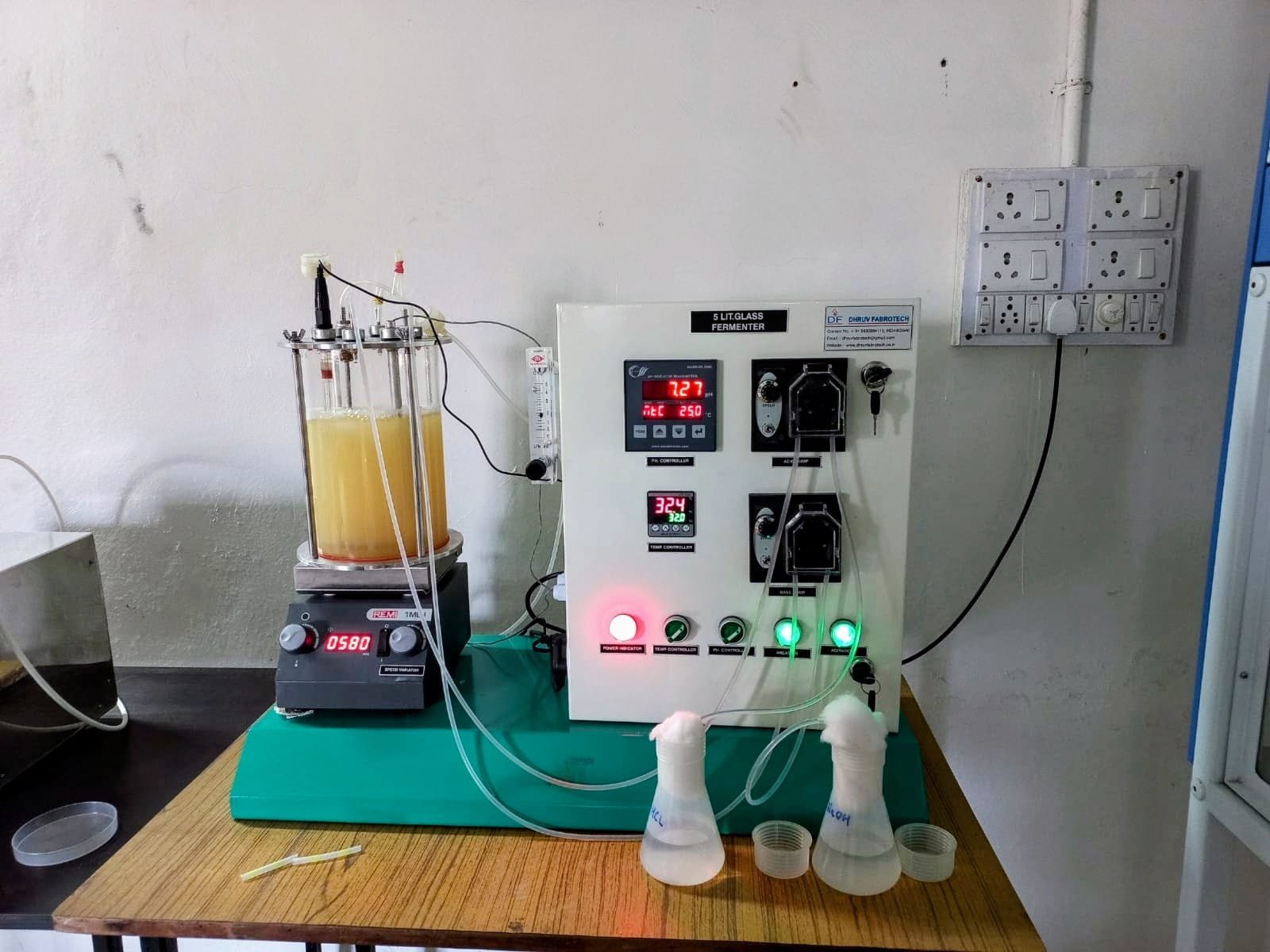
Autoclavable Glass Fermenter Manufacturer in India – Dhruv Fabrotech
An autoclavable glass fermenter is a laboratory-scale fermentation system with a glass vessel designed to support sterilization through an autoclave when the selected vessel and configuration are suitable for that procedure.
The glass vessel provides a controlled space for cultivating microorganisms, microbial cultures, or other biological systems. Its transparent construction also allows researchers to observe the culture, mixing, aeration, and visible changes during the fermentation process.
Why Choose Dhruv Fabrotech for Autoclavable Glass Fermenters?
Dhruv Fabrotech specializes in fermentation and biotechnology equipment for laboratory, research, pilot, and industrial applications. The company can configure glass fermenters according to the process instead of relying on one standard setup for every laboratory.
Customers can discuss their required working volume, biological process, vessel configuration, sterilization requirements, pH and dissolved oxygen monitoring, agitation, aeration, automation, and other technical requirements before finalizing the system.
Microbiology Research
Microbiology laboratories can use them for microbial growth studies, culture development, fermentation experiments, and evaluation of different process conditions.
Pharmaceutical R&D
Pharmaceutical research facilities can use laboratory fermenters for microbial fermentation studies, process optimization, enzyme research, and early-stage bioprocess development.
Biofertilizer Research
Glass fermenters can support research involving beneficial microorganisms used in biofertilizer development, media optimization, and growth studies.
Enzyme Research
Controlled fermentation conditions can help researchers study microorganisms involved in enzyme production and evaluate suitable process parameters.
Probiotic Development
Laboratory fermenters can support controlled cultivation and process studies involving probiotic microorganisms.
Agricultural Biotechnology
The equipment can be used for research related to biofertilizers, biopesticides, microbial products, and other biological agricultural applications.
Academic & University Research
Universities and colleges can use autoclavable glass fermenters for practical laboratory work, fermentation experiments, student projects, and research.
Process Development
Research teams can evaluate temperature, pH, aeration, agitation, dissolved oxygen, and other conditions before moving toward larger-scale equipment.